There is no single right answer for every family
Choosing between homeschool and public school can feel like a huge decision because it affects more than academics. It changes the daily schedule, the way children socialize, how parents use their time, and how much control a family has over the learning environment.
The better question is not which option is best in general. It is which option fits your child, your household, and the kind of school experience you want right now.
What public school can offer
Public school gives children a built in daily routine, access to teachers and support staff, regular interaction with classmates, and a wide range of activities that may include sports, music, clubs, counseling, and special education services.
For many families, the biggest advantage is structure. The school day already has a schedule, curriculum, grading system, and staff responsible for instruction. Parents can stay involved without having to design the entire learning day themselves.
What homeschool can offer
Homeschool can give families more control over pace, curriculum, schedule, and learning style. A child who needs more time in one subject can slow down, while a child who moves quickly can keep going without waiting for the rest of a class.
It can also make it easier to build school around travel, family schedules, outside classes, sports, creative interests, or a child who learns better in a quieter setting.
The time commitment matters
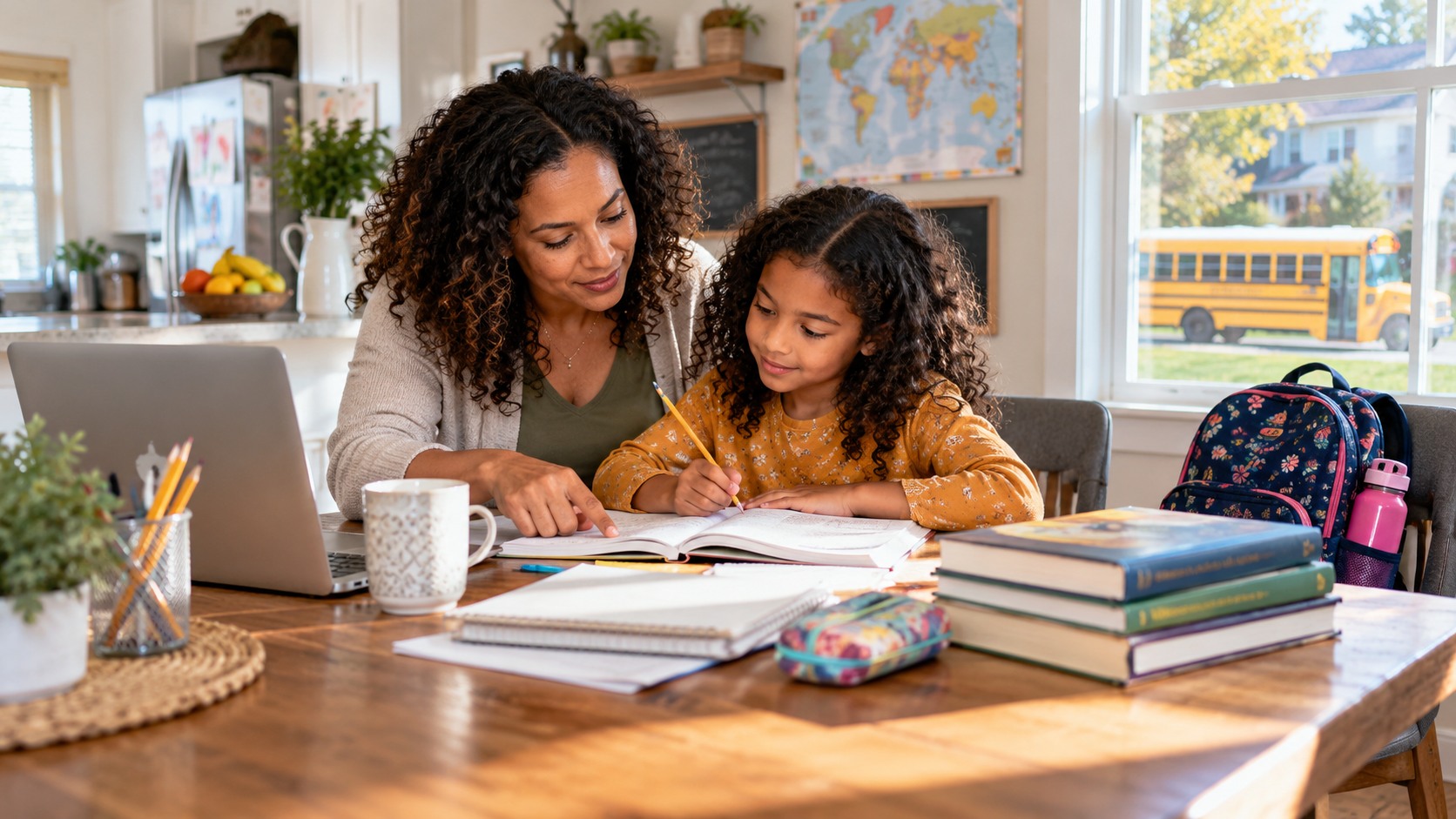
Homeschooling is not only a school choice, it is also a household commitment. Someone has to plan lessons, supervise work, track progress, find activities, and make sure the child is meeting any state requirements that apply.
Public school shifts most of the teaching day to the school, but families still spend time on transportation, homework, school events, communication with teachers, and activities outside the classroom.
Social life looks different, not necessarily smaller
Public school makes daily peer interaction automatic because children spend much of the day around classmates. Homeschool families usually have to be more intentional about creating those opportunities through sports, community groups, co ops, classes, faith communities, neighborhood friendships, or other activities.
For some children, a large school environment is energizing. For others, smaller and more controlled social settings may be a better fit.
Cost can be different too
Public school does not charge tuition, although families may still pay for supplies, activities, transportation, meals, or after school care.
Homeschool costs vary widely. Some families use free or low cost materials, while others pay for full curriculum programs, tutors, online classes, field trips, memberships, and activities. The larger cost can also be the time a parent spends teaching instead of working outside the home.
Your child may tell you more than a checklist can
A child who is thriving academically, socially, and emotionally in public school may not need a major change. A child who is overwhelmed, bored, anxious, struggling with the environment, or asking for a different way to learn may be giving you useful information.
It is also possible for the right answer to change. A family can choose public school for one season and homeschool for another. The decision does not have to define the rest of a child’s education.
What should you compare before deciding?
Look at your child’s learning style, the quality of the local public school options, your work schedule, your budget, transportation, special learning needs, activities, social opportunities, and how much time an adult can realistically devote to teaching at home.
The goal is not to choose the option that sounds best to other people. It is to choose the setting where your child has the strongest chance to learn, grow, and feel supported.