
A 2-1 buydown temporarily lowers your mortgage rate — 2 percentage points below your note rate in year one, 1 point below in year two — and then your payment steps up to the full rate in year three. The cost is usually paid by the seller as a closing-cost concession, deposited into an escrow account at closing.
This is not a permanent rate reduction, and it is not an adjustable-rate mortgage. Your loan is a standard fixed-rate mortgage; only what you pay each month changes, because the seller's money in escrow covers the difference.
What it looks like in real numbers
Let's walk through a hypothetical example using a $600,000 loan with a 7.5% note rate. (This is an illustrative rate, not a verified October 11 market average or a loan quote.)
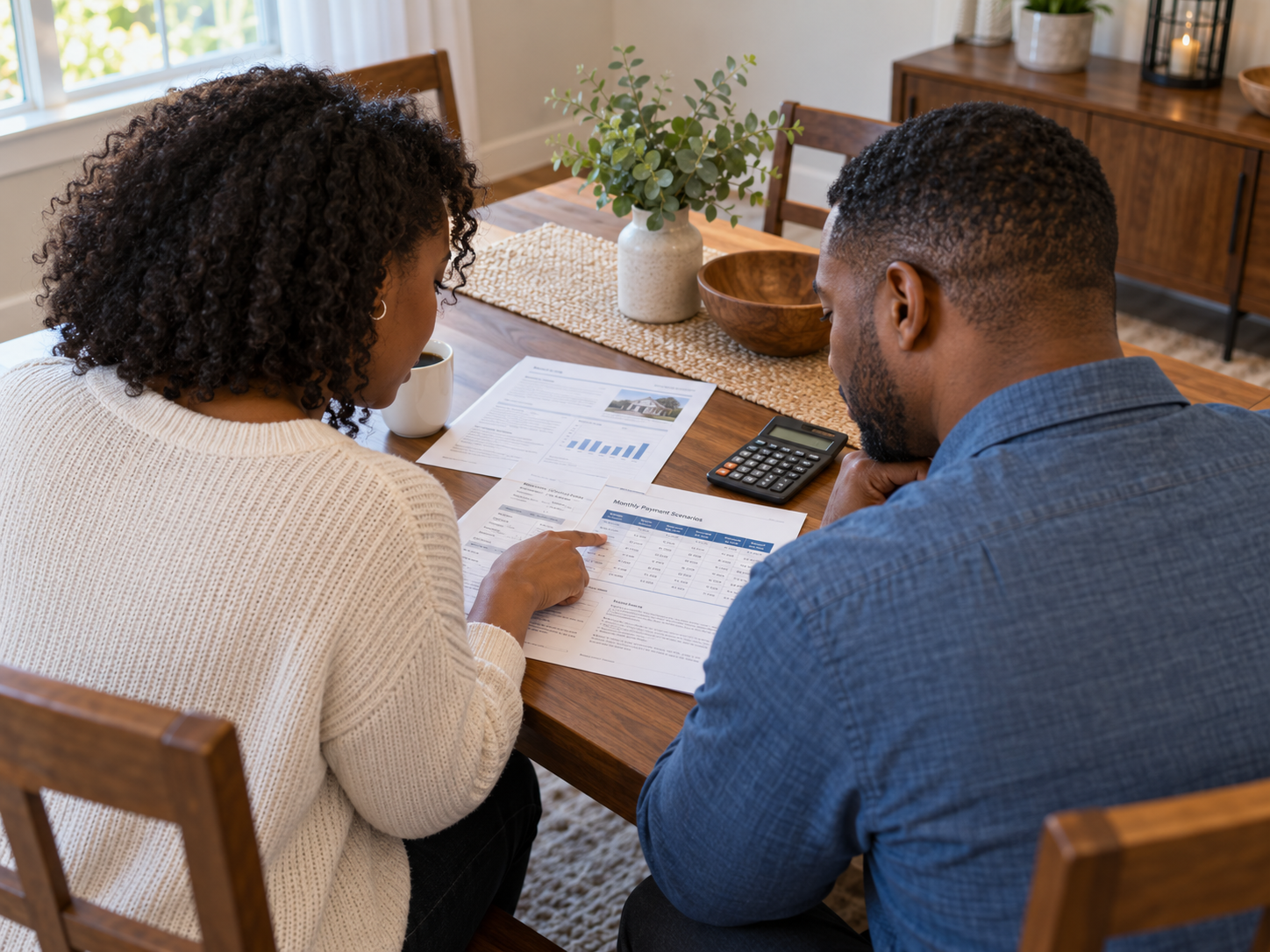
| Year | Effective rate | Approx. monthly P&I |
|---|---|---|
| 1 | 5.5% | ~$3,407 |
| 2 | 6.5% | ~$3,792 |
| 3–30 | 7.5% | ~$4,195 |
That's a savings of roughly $788/month in year one and $403/month in year two — about $14,300 total over the two years — funded by the seller's concession, not by you. Illustrative figures: principal and interest only, excluding taxes, insurance, and HOA. Not an offer to lend; your numbers will differ.
Why sellers offer it instead of cutting the price
For a seller, funding a buydown costs roughly the same as a price reduction — but for the buyer, the difference is dramatic. The same $14,300 applied as a price cut on a $600,000 loan would shave less than $100 a month off the payment. The buydown puts the savings where they hurt most: the first two years of homeownership, when moving costs, furniture, and repairs all land at once.
The three things you must understand first
- It ends. In year three, your payment jumps to the full amount. You have to be able to afford the note-rate payment from day one — lenders qualify you at the note rate, not the bought-down rate.
- Do not depend on a raise or refinance. Future income and lower rates are uncertain. Choose a loan whose full payment is affordable even if neither happens.
- Unused funds depend on the agreement. If the mortgage is paid off early, remaining funds may reduce the payoff amount or be returned as the written buydown agreement specifies. Do not assume you automatically receive a cash refund.
I'm a realtor, not an attorney or financial advisor — talk to a licensed professional about your specific situation. And if you're buying in the San Fernando Valley, ask me about negotiating a buydown as part of your offer — it is one option to compare with a price reduction or other closing-cost credit.
References
Resources checked October 11, 2026. Requirements and market data can change. The photograph is an AI-generated illustration.