
Lake Balboa Park and The Japanese Garden offer two distinct ways to spend time outdoors in the Sepulveda Basin. Together, they show how a broad public recreation area and a carefully designed garden can create very different experiences within the same part of the San Fernando Valley.
A visit can be a simple morning outing or a way to explore the surroundings of neighborhoods you are considering for a move. The park and garden operate separately, so the most useful plan starts with the garden’s current visiting arrangements and leaves enough time to enjoy each place at a comfortable pace.
Lake Balboa as a public gathering place
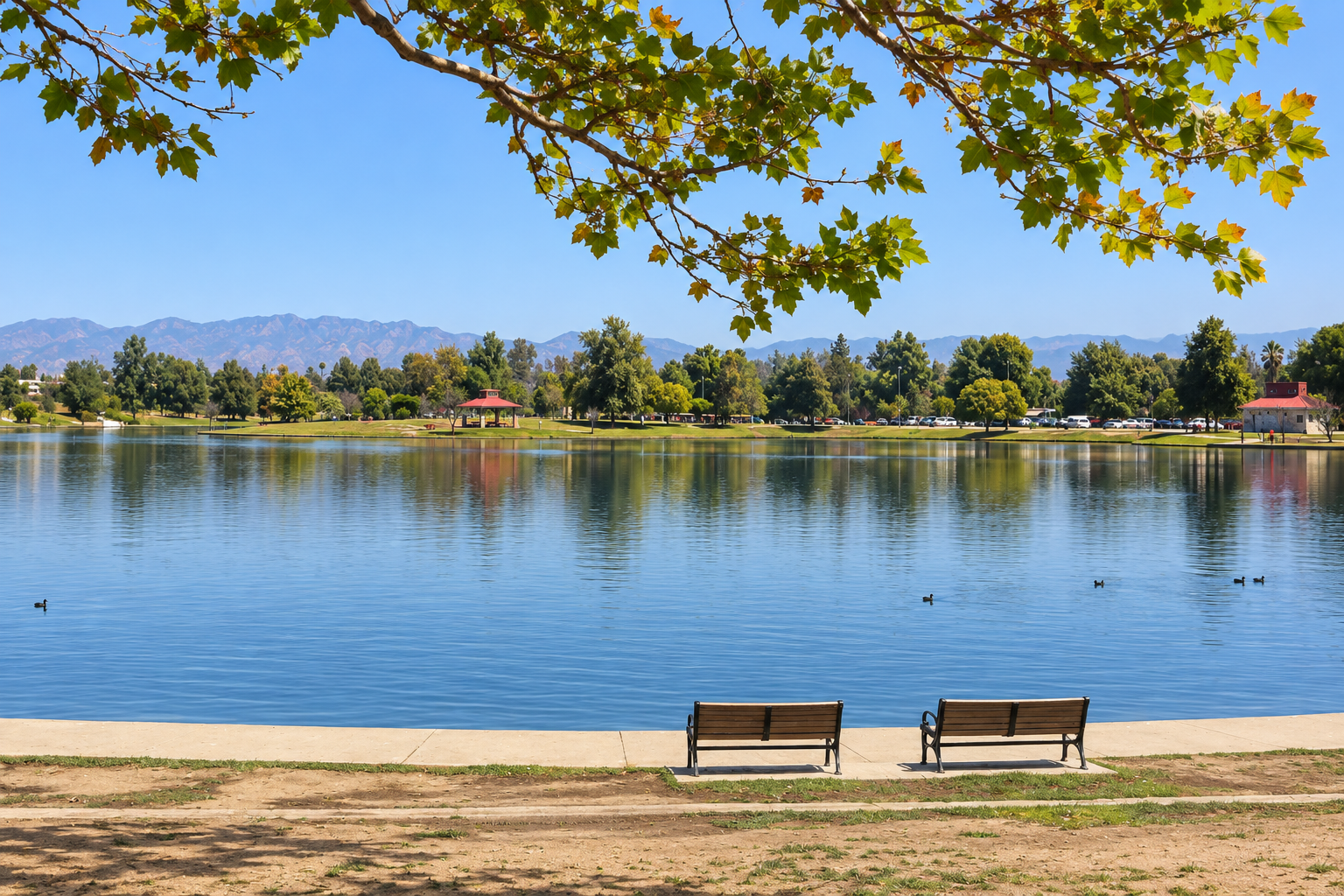
Lake Balboa Park, also known as Anthony C. Beilenson Park, is listed by the City of Los Angeles at 6300 Balboa Boulevard. The water, open landscape, and park facilities give the area a different character from the streets and shopping corridors around it.
Time here can be informal. A walk, a pause by the water, or a picnic with a group can become the main activity without a detailed itinerary. A visitor interested in a particular facility should check the city’s current information for access and any reservation arrangements before building a visit around it.
The park also provides a useful reminder that a neighborhood’s appeal can extend beyond the boundary of a residential block. Places used for recreation can shape a week’s routines, including where someone spends a free morning or meets family from another part of the Valley.
A playground visit beside the lake
The city includes Lake Balboa in its directory of universally accessible playgrounds. That provides another reason to choose the park when an outing includes children or visitors interested in using a play area as well as spending time beside the water.
A playground visit and a walk can be combined without making the outing complicated. Consider where the group will gather, how much distance everyone wants to cover, and whether there is time to sit and enjoy the setting. The park can accommodate a morning centered on being together, rather than only moving from one planned stop to another.
Visitors who need particular access arrangements should review the city’s current facility information before leaving. Accessibility is about the route, facilities, and individual needs of the visit as well as the designation of a play area.
The Japanese Garden offers a different landscape
The Japanese Garden is at 6100 Woodley Avenue in Van Nuys. Designed by Dr. Koichi Kawana and dedicated in 1984, it brings together dry, strolling, and tea garden settings in a landscape that changes as you move through it.
The official garden description identifies Tortoise Island and a wisteria arbor within the dry garden, followed by a strolling garden with waterfalls, streams, stone lanterns, and planted views. The path leads toward the Shoin Building and its teahouse, giving the visit a sequence of different spaces rather than one continuous open lawn.
The garden also demonstrates the use of recycled water from the nearby Donald C. Tillman Water Reclamation Plant. That relationship connects the landscape with a practical part of city infrastructure. A visit can be enjoyed for the design itself and for the example it provides of water reuse in Los Angeles.
Check the visiting arrangements before choosing a date
The garden’s official website currently lists regular visits from Monday through Thursday and advertises limited monthly Sunday openings. Friday and Saturday are closed, and holiday and rainfall closures can affect access. Check the specific date and any current notices before traveling.
Visitor arrangements include last entry, admission procedures, and rules about what may be brought inside. The garden asks visitors to stay on the paths and restricts food and drinks, with water permitted. A picnic therefore belongs in the appropriate park setting, not as an assumption about the garden visit.
Groups and visitors with particular access needs should review the relevant information in advance. Knowing how entry works makes it easier to decide whether to visit both places on the same day or enjoy them as separate outings.
Give each place enough time
A morning that includes both locations needs space for travel between them and the transition from an open recreation setting to a garden with controlled entry. There is no need to rush through the park in order to arrive at the garden, or to make every visit include both destinations.
If the garden is closed on the day available to you, Lake Balboa can remain a worthwhile outing on its own. If the garden is the main purpose, choose the date around its current schedule and leave the rest of the morning flexible.
Put the surroundings into a housing search
For someone considering Lake Balboa or nearby Valley neighborhoods, the Sepulveda Basin adds a practical dimension to the location comparison. Consider how you would reach it, how often you would use it, and whether the activities available fit your own routines.
A home still needs to work for everyday living, including its layout, condition, travel needs, and responsibilities. Outdoor space nearby can be part of that picture without replacing those considerations. Dominique can help connect the appeal of the area with the specific streets and properties you are considering, so an enjoyable visit becomes useful context for a move.
Sources
- City of Los Angeles Recreation and Parks, Lake Balboa and Anthony C. Beilenson Park
- The Japanese Garden, official background
- The Japanese Garden, hours and admission
- The Japanese Garden, visitor etiquette
- City of Los Angeles Recreation and Parks, universally accessible playgrounds
- The Japanese Garden, detailed garden background