

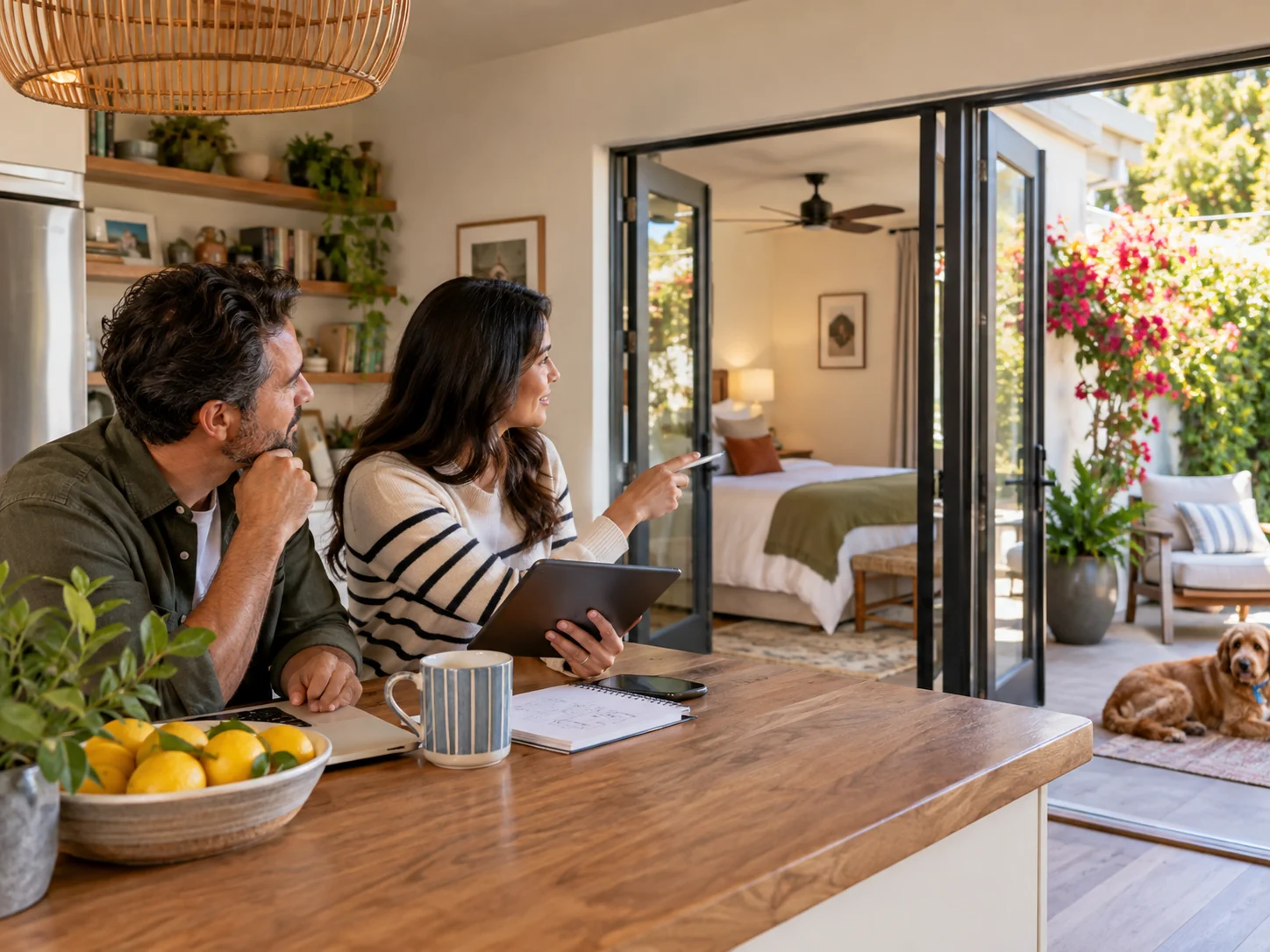
A property’s fit for Airbnb depends on the space being offered and the owner’s ability to support the stay. Once the proposed rental has been confirmed as permitted, the practical decision is whether the home can comfortably accommodate guests and whether the arrangement suits the owner’s life.
An appealing location and attractive photographs can bring attention to a property, but they do not describe all the responsibilities that come with it. The guest’s experience begins with arrival and continues through ordinary tasks such as parking, sleeping, cooking, and asking for help when something is unclear.
Consider the stay from arrival onward
Think about the physical relationship between the guest space and the rest of the property. An entrance shared with the owner, a separate unit, and a bedroom within the household create different expectations about privacy and access.
The property should support the use being described. Stairs, a long route from parking, shared laundry, limited storage, or a bathroom outside the guest area can influence whether the space suits a particular stay. An accurate description helps prospective guests understand those features before committing.
Clear boundaries can matter as much as amenities. Owners need to distinguish the spaces available to guests from areas that remain private, especially where personal possessions or everyday household activities share the property.
The layout affects comfort
Sleeping arrangements should be considered alongside bathrooms, circulation, and the living areas guests may use. A stated capacity does not explain whether the property feels comfortable when everyone is present. The layout, privacy, and intended use all matter.
Outdoor space brings its own considerations. A patio or garden may be a useful feature, while shared boundaries, nearby bedrooms, or a communal access route may require clearer expectations. The aim is a stay that works within the home’s setting rather than one that creates avoidable friction with the household or neighbors.
Ownership still requires attention during a stay
Guests may encounter an appliance issue, a plumbing problem, or difficulty accessing the property. The owner needs an appropriate arrangement for handling those situations, including periods when they are unavailable or away from the area.
Cleaning, condition checks, maintenance, and communication remain real responsibilities even when a platform manages the reservation itself. A reservation system is one part of the arrangement, while the property still needs someone responsible for its physical condition and the guest’s practical needs.
The extent of support required varies with the home. A property with several shared facilities or significant outdoor features can involve a different workload from a simpler space. The useful assessment is based on what this particular property requires.
Balance personal use with the proposed rental
An owner who wants to use the home between stays needs to consider how the rental affects access to personal belongings and the readiness of the space. A household renting a spare room has a different relationship with guests from an owner who will not be present.
Neither arrangement should be treated as effortless by default. The question is whether the proposed use fits the owner’s comfort with shared space, schedule, and responsibility. A realistic expectation is more useful than a promise that a particular property type creates easy income.
Protect the home while respecting the guest
Insurance should be reviewed for the intended activity, and personal items may need appropriate secure storage. Access arrangements should allow the owner to manage the property responsibly while respecting privacy and applicable rules.
Any monitoring or security equipment must be evaluated against the relevant law and platform requirements. Ownership of the property does not establish that every device or form of monitoring is appropriate. Clear, lawful expectations support the arrangement more effectively than relying on a guest profile as a guarantee of behavior.
Decide whether the arrangement fits
The practical assessment should leave the owner with a clearer picture of the property’s suitability and the support it needs. It can also establish that another rental arrangement, a different scope, or no rental use is more appropriate.
For the detailed regulatory discussion, read the separate Los Angeles rental rules post. Keeping that information there allows this article to focus on the home and the owner’s responsibilities. Dominique can help discuss property management options in relation to the individual property without promising bookings or a particular income.