

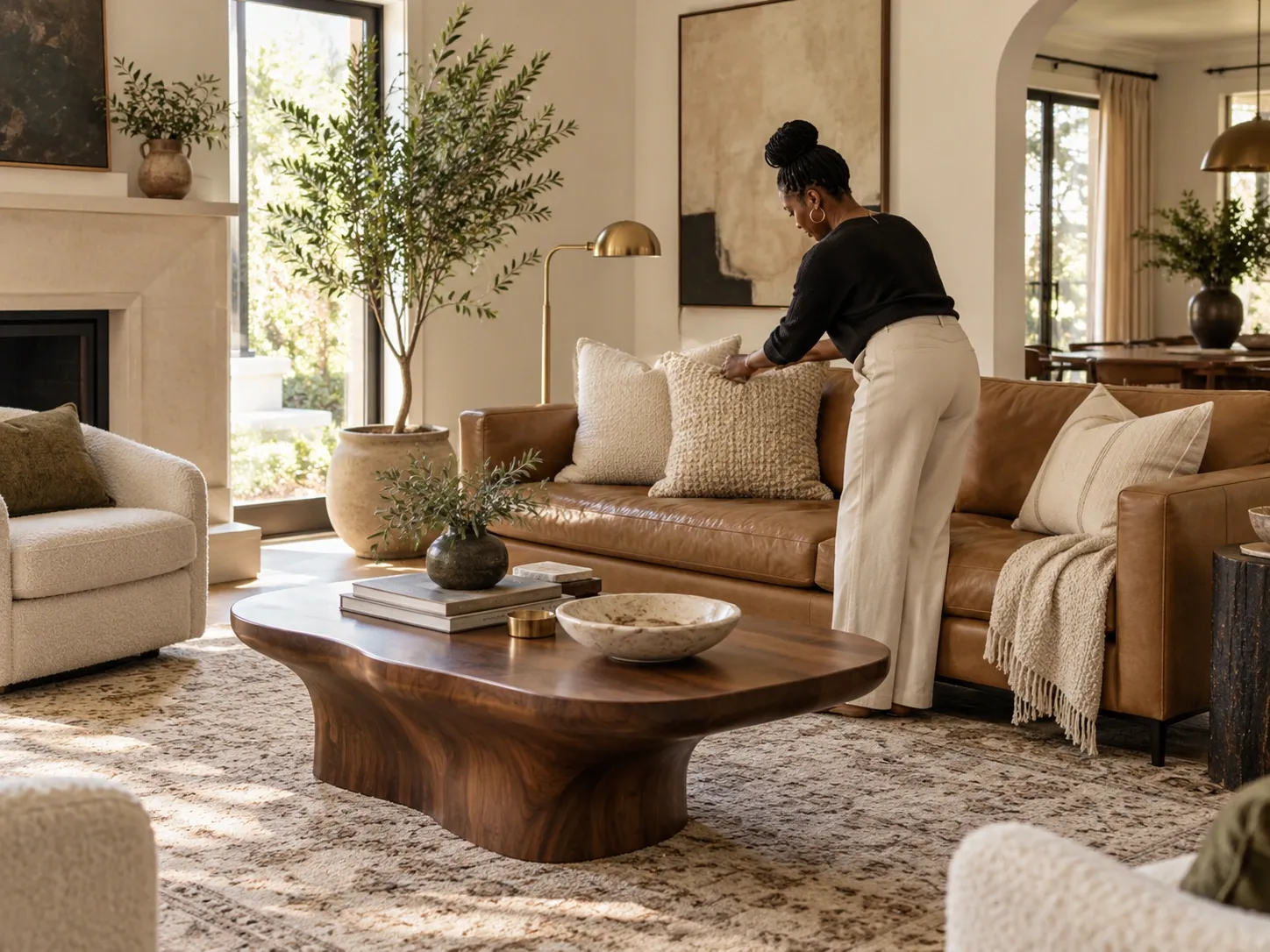
Living room staging helps a buyer understand where people can sit, how the space connects to the home, and which features shape the room’s character. The most useful presentation respects the actual proportions, light, and movement through the space.
This room often performs several jobs at once. It may be a place for conversation, television, reading, children’s play, or a quiet moment near a window. Presenting it clearly means showing a believable use of the room while allowing its physical qualities to remain visible.
The room’s layout comes first
A living room can feel generous on a floor plan and awkward during a visit if the main route through it is unclear. Doorways, stairs, adjoining rooms, and access to the garden all affect where the space needs to remain open. Furniture should help explain those relationships rather than disguise them.
A room with several entrances creates different choices from one with a single doorway. Likewise, a long room needs to be understood differently from a compact, nearly square space. There is no one arrangement that belongs in every home simply because it looks attractive in a photograph.
The useful result is an understandable room. Buyers should be able to see how someone could enter, sit, move through, and use the space without mentally rebuilding it during the showing.
Scale influences the impression of space
Furniture can change how a room’s proportions are perceived. A large piece may emphasize comfort but obscure a window or narrow a route. Several small pieces can also make the space feel busy when they break up the available floor area.
Existing furnishings may already be suitable. The question is how their size and placement relate to the room, including the main seating, tables, and any work or storage area. A believable arrangement gives a buyer useful context without implying that the home has more space than it does.
Light is part of the room’s character
Windows, the direction of daylight, and the light available later in the day all contribute to how a living room feels. A bright area near a window may contrast with a deeper part of the room, and reflective or dark finishes can change that relationship.
Presentation should acknowledge the room as it is actually experienced. Photographs and in person visits need to describe the same property, with attention to both natural light and the room’s normal lighting. Electrical work or changes to fixed lighting may require professional input beyond decorative choices.
Materials can connect the room without overwhelming it
Textiles, artwork, and the furniture’s finishes can help the room feel coherent. Their role is to relate to the architecture and the pieces that remain, not to introduce a separate competing idea on every wall or surface.
A room with a fireplace, an important window, or a distinctive ceiling already has visual information. The presentation should make that feature understandable within the whole space. Buyers need a sense of the room’s possibilities, with enough visual calm to notice the property itself.
Keep the presentation practical and accurate
When the seller still lives in the home, the living room needs to remain usable between showings. Daily storage, access, and the household’s routines belong in the discussion. A presentation that is impossible to maintain can become a burden during an already busy move.
The room should also remain honest about condition. Furniture and decoration should not hide damage or suggest that an item is included when it is not. Clear presentation works alongside appropriate repairs and disclosures.
For an explanation of staging across the whole property, read the general home staging post. This article stays with the living room, its proportions, relationships, and the everyday use that makes the space understandable.